Laundry
Having clean clothes is just as important as taking showers for staying healthy, feeling confident, and protecting against infections—especially for people who are unsheltered. To learn more about why regular access to laundry services matters and how it supports health and dignity. Click the button below to view a preliminary draft of the SDSU PSJ WaSH report – the perspectives contained in the report are those of the PSJ research team only and do not necessarily reflect the views of any of our funders.
Laundry
Having clean clothes is just as important as taking showers for staying healthy, feeling confident, and protecting against infections—especially for people who are unsheltered. To learn more about why regular access to laundry services matters and how it supports health and dignity. Click the button below to view a preliminary draft of the SDSU PSJ WaSH report – the perspectives contained in the report are those of the PSJ research team only and do not necessarily reflect the views of any of our funders.

Laundry facility shortage endangers public health
“There’s only two washers and two dryers for three, four floors of unhoused youth. Then I would have to clean the washer, like run a cycle with bleach before I could wash my clothes.” – Unhoused Californian
Laundry facility shortage endangers public health
“There’s only two washers and two dryers for three, four floors of unhoused youth. Then I would have to clean the washer, like run a cycle with bleach before I could wash my clothes.” – Unhoused Californian
Clean Clothes, Stronger Communities, Better Health
By providing regular, well-maintained laundry facilities for unhoused individuals, we can protect their health, dignity, and job opportunities. Prioritizing clean clothes helps prevent infections and supports people in rebuilding their lives.
Clean Clothes, Stronger Communities, Better Health
By providing regular, well-maintained laundry facilities for unhoused individuals, we can protect their health, dignity, and job opportunities. Prioritizing clean clothes helps prevent infections and supports people in rebuilding their lives.
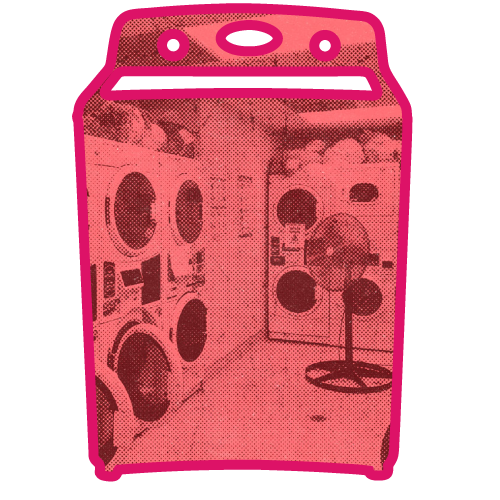
Accessible laundry services for unsheltered people helps prevent resorting to survival strategies for hygiene.
“Just like reuse clothes. Smell it if it was clean (…) or go to like a laundry mat cause I didn’t often have a laundry place. There were times where I had to steal clothes as well when I was a little younger.”
Accessible laundry services for unsheltered people helps prevent resorting to survival strategies for hygiene.
“Just like reuse clothes. Smell it if it was clean (…) or go to like a laundry mat cause I didn’t often have a laundry place. There were times where I had to steal clothes as well when I was a little younger.”
Infection is less likely when laundry services are provided to unsheltered people
“…things get nasty if you can’t change your underwear or again, if somebody doesn’t have access to adequate bathrooms. Then there is a higher chance of them even infecting themselves if their underwear are not clean.”
Infection is less likely when laundry services are provided to unsheltered people
“…things get nasty if you can’t change your underwear or again, if somebody doesn’t have access to adequate bathrooms. Then there is a higher chance of them even infecting themselves if their underwear are not clean.”
Laundry services for unsheltered people can offer jobs to people with lived experience.
“And so, that could be a space that also provides income or like a job for people. Like people who are lived experience individuals come in and run it, maintain it, do the laundry, keep the clothes washed and everything.”
Laundry services for unsheltered people can offer jobs to people with lived experience.
“And so, that could be a space that also provides income or like a job for people. Like people who are lived experience individuals come in and run it, maintain it, do the laundry, keep the clothes washed and everything.”
Low-barrier public laundry services for unsheltered people strengthen community ties and overall health.
“I think that just takes those kinds of things (…) not thinking with barriers and restrictions, not thinking in scarcity, thinking in abundance and how can we create something that meets the abundant needs of our community.”
Low-barrier public laundry services for unsheltered people strengthen community ties and overall health.
“I think that just takes those kinds of things (…) not thinking with barriers and restrictions, not thinking in scarcity, thinking in abundance and how can we create something that meets the abundant needs of our community.”

Human Needs and Survival Strategies
Clean clothes are just as important as showers for helping people look, feel, and smell clean. Having regular access to laundry facilities helps people keep their dignity and can make it easier to get and keep jobs or avoid unfair treatment because of their appearance. People who menstruate, as well as those with open or healing wounds or skin infections, may need to use laundry facilities more often than others.
Human Needs and Survival Strategies
Clean clothes are just as important as showers for helping people look, feel, and smell clean. Having regular access to laundry facilities helps people keep their dignity and can make it easier to get and keep jobs or avoid unfair treatment because of their appearance. People who menstruate, as well as those with open or healing wounds or skin infections, may need to use laundry facilities more often than others.

Health Implications
Consistent access to laundry services is very important for preventing many types of skin infections and diseases. Clean clothes also help people care for wounds properly, maintain basic dignity, and support their overall well-being. For people who are unhoused, the risk of skin diseases depends on several things, such as where they live, the local climate, their living conditions, and how easily they can access health care.
Health Implications
Consistent access to laundry services is very important for preventing many types of skin infections and diseases. Clean clothes also help people care for wounds properly, maintain basic dignity, and support their overall well-being. For people who are unhoused, the risk of skin diseases depends on several things, such as where they live, the local climate, their living conditions, and how easily they can access health care.

Basic Standards of Care
The ideal solution for laundry services is permanent housing, which includes either a private washer and dryer or easy access to shared laundry facilities, such as mobile laundry units or laundry rooms in shelters and community centers. It is recommended to provide at least one washer and one dryer for every 20 unhoused people, based on the expectation that each person does two to three loads weekly.
Basic Standards of Care
The ideal solution for laundry services is permanent housing, which includes either a private washer and dryer or easy access to shared laundry facilities, such as mobile laundry units or laundry rooms in shelters and community centers. It is recommended to provide at least one washer and one dryer for every 20 unhoused people, based on the expectation that each person does two to three loads weekly.

Promising Practices
As with showers, each community should choose between mobile or fixed-location laundry services based on local needs. Mobile laundry programs, such as Haven of Hope on Wheels in rural Northern California and The Laundry Truck in Los Angeles, have proven effective in various settings across the state. San Diego is also considering converting retired school buses into mobile laundromats for unhoused people. Both mobile and fixed options successfully address different community needs. Project Ropa in Los Angeles operates a mobile clothing closet, providing clothing and hygiene supplies weekly. The ReFresh Spot in Skid Row is a permanent facility where guests sign up for laundry times, receive attendant assistance, and can access additional services like showers, Wi-Fi, and health care while they wait.
Promising Practices
As with showers, each community should choose between mobile or fixed-location laundry services based on local needs. Mobile laundry programs, such as Haven of Hope on Wheels in rural Northern California and The Laundry Truck in Los Angeles, have proven effective in various settings across the state. San Diego is also considering converting retired school buses into mobile laundromats for unhoused people. Both mobile and fixed options successfully address different community needs. Project Ropa in Los Angeles operates a mobile clothing closet, providing clothing and hygiene supplies weekly. The ReFresh Spot in Skid Row is a permanent facility where guests sign up for laundry times, receive attendant assistance, and can access additional services like showers, Wi-Fi, and health care while they wait.
Key Takeaway
Clean clothes are as important as showers for maintaining personal hygiene, dignity, and overall well-being, especially for people who are unhoused. Regular access to laundry facilities helps prevent skin infections, supports proper wound care, and can make it easier for people to find and keep jobs or avoid unfair treatment. Some people, such as those who menstruate or have wounds, may need laundry access more frequently. The recommended standard is one washer and dryer for every 20 unhoused people, with machines kept clean, accessible, and in good repair; California has no statewide minimums, though some localities do. Communities should choose between mobile or fixed-location laundry services based on local needs, with successful examples including Haven of Hope on Wheels, The Laundry Truck, Project Ropa, and The ReFresh Spot. Both mobile and permanent options can effectively meet various needs, often combining laundry with other support services.
Key Takeaway
Clean clothes are as important as showers for maintaining personal hygiene, dignity, and overall well-being, especially for people who are unhoused. Regular access to laundry facilities helps prevent skin infections, supports proper wound care, and can make it easier for people to find and keep jobs or avoid unfair treatment. Some people, such as those who menstruate or have wounds, may need laundry access more frequently. The recommended standard is one washer and dryer for every 20 unhoused people, with machines kept clean, accessible, and in good repair; California has no statewide minimums, though some localities do. Communities should choose between mobile or fixed-location laundry services based on local needs, with successful examples including Haven of Hope on Wheels, The Laundry Truck, Project Ropa, and The ReFresh Spot. Both mobile and permanent options can effectively meet various needs, often combining laundry with other support services.
Your Guide to WaSH Resources
Learn how improving access to water, restrooms, trash disposal, handwashing, showers, menstrual hygiene, and laundry services can transform the lives of unhoused Californians and build healthier communities for all. Each resource provides immediate relief while supporting dignity, public health, and long-term solutions. Click on a topic below to discover more.
Your Guide to WaSH Resources
Learn how improving access to water, restrooms, trash disposal, handwashing, showers, menstrual hygiene, and laundry services can transform the lives of unhoused Californians and build healthier communities for all. Each resource provides immediate relief while supporting dignity, public health, and long-term solutions. Click on a topic below to discover more.
WaSH Services Homepage
Discover ways to provide clean water, sanitation, and hygiene services to people experiencing homelessness.
(Click to read more…)
Water for Drinking and Other Survival Strategies
Learn how providing bottled water and 24/7 public water access supports unsheltered Californians.
(Click to read more…)
Toilets
Discover how expanding access to clean, safe public restrooms can improve health and dignity for all Californians.
(Click to read more…)
Trash Disposal Services
Discover how expanded trash services for unsheltered Californians can help build cleaner, safer, and healthier communities.
(Click to read more…)
Handwashing
Learn how reliable access to water, soap, and plumbing helps stop the spread of diseases such as Hepatitis A.
(Click to read more…)
Showers
Discover how mobile showers and community facilities provide safe, dignified access to essential hygiene for Californians experiencing homelessness.
(Click to read more…)

Menstrual Hygiene
Discover how providing free menstrual products and clean facilities supports vulnerable unsheltered people who menstruate.
(Click to read more…)